This is yet another installment of “Move Quickly and Turn Worthless Shit Into Production.” When you come up through real software development, not this worthless script kiddie shit being touted as great, but real software development, you understand there is a method to the madness. You have to do all of that documentation up front so there are procedures and rules in place the QA team can use to verify everything using tests which do … Script Kiddies and the Catastrophes They CauseRead more
Information Technology
Posts relating to the IT industry

Posted inExperience / Information Technology / Thank You Sir May I Have Another
The getkey Trap
This topic came up on my Jed mailing list the other day and, once again, I got in touch with my inner Bill. Your inner Bill? Yes, that cranky old man who isn’t putting up with the world around him and wants it to be his way. The older you get the easier it is to find your “inner Bill.” In this case it fits because I have lived this death at least a hundred … The getkey TrapRead more

Posted inExperience / Information Technology / Raspberry Pi
How Far We’ve Come – Pt. 7
Originally I did a stupid thing. It was so stupid I made it the featured image for this post. I used the install/remove applications menu option to install postgresql and postgresql-contrib. Finding postgresql was like finding a needle in a haystack after using the search. The software manager for the Raspberry Pi doesn’t order by package name nor does it display that first. It displays the one-line human friendly description first and has a sort … How Far We’ve Come – Pt. 7Read more
Posted inInformation Technology / Raspberry Pi
KDE Neon – Distcc and Qt
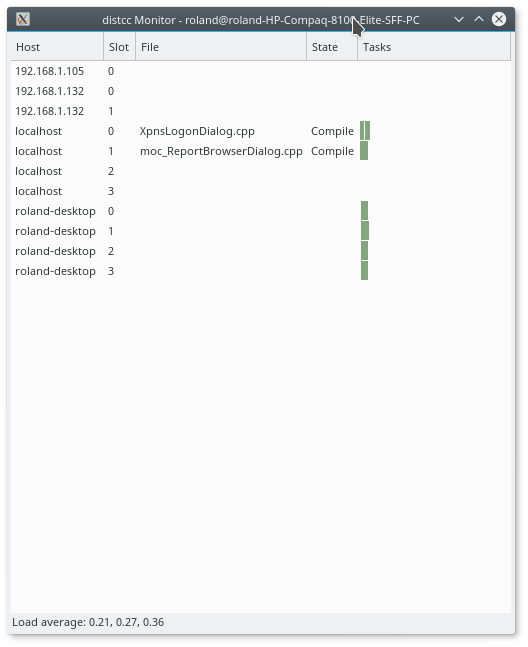
One of the tools which was wildly touted years ago was distcc. This is a distributed compilation system which can be brutal to set up, but can also dramatically reduce compilation times for big jobs. It has fallen out of favor in recent years because most developers end up getting a quad or more core machine with a modern enough CPU to have all kinds of virtualization and hyper threading. These machines also tend to … KDE Neon – Distcc and QtRead more
Posted inInformation Technology / Thank You Sir May I Have Another
How OpenSource Bugs are -fixed-
These 3 “solutions” are what typically “fix” all OpenSource bugs. Close without testing because “code has changed too much.” Declare it an “upstream” bug so you get credit for the close without actually doing anything. Let it rot until the version it was logged against is “no longer supported” and tell the user to retest against a currently supported code base.